End-of-Year CEO Letter: What 2025 Revealed About Our Sector
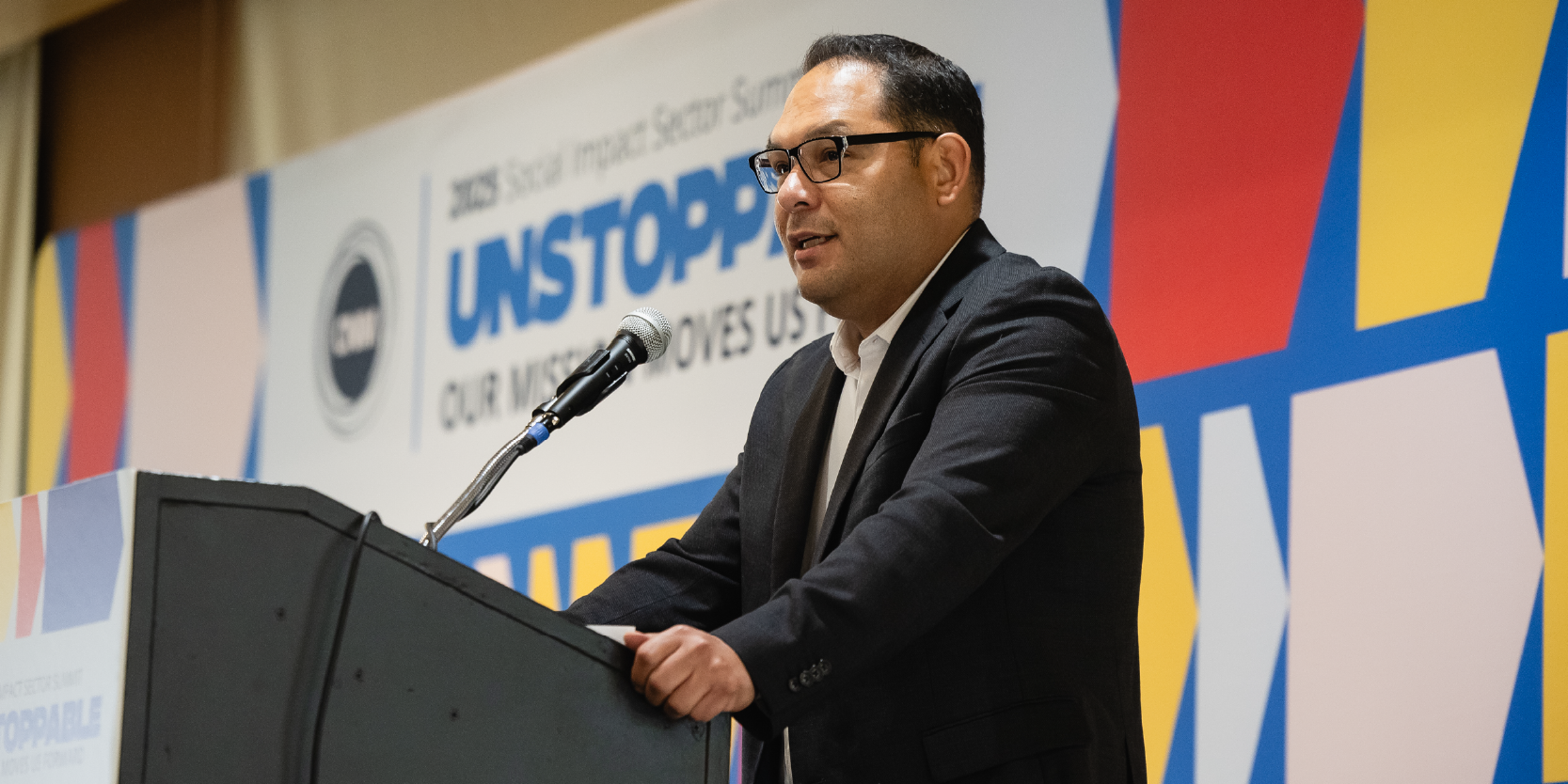
By Efrain Escobedo, President & CEO, Center for Nonprofit Management (CNM)
As we close out 2025, I want to speak plainly about what this year revealed about the state of Southern California’s social impact sector. This has been one of the hardest years many organizations have ever faced, a year defined not by a single crisis but by multiple crises unfolding at once.
While our sector has always been resilient, 2025 made clear that resilience alone is not a sustainable strategy.
Southern California’s nonprofits were asked to shoulder impossible burdens.
In January, the fires that tore through our region displaced thousands, burned through entire neighborhoods, and destroyed our schools, places of worship, and local businesses in mere hours. Yet, nonprofits were the ones people turned to for shelters, meals, air purifiers, N95s, emergency cash, and reliable information. Many organizations were responding to the disaster even as their own employees were evacuated or had just lost homes.
Just as communities began to steady themselves, another painful blow hit this summer. Across the region, ICE raids aggressively targeted predominantly Latino and immigrant neighbors. Our family members, friends, and neighbors were violently kidnapped with no due process while waiting for the bus, working at their jobs, attending legal immigration hearings, and so on. Families stopped going to work and earning incomes. Parents kept their children home and away from school. In the wake of the raids, it fell to organizations like CHIRLA to immediately coordinate rapid-response networks and legal action to halt unconstitutional ICE enforcement, defend basic human rights, and push for due process and democratic accountability.
I heard from Southern California leaders who said the emotional toll on staff was unlike anything they’ve seen in decades.
And while organizations were managing this trauma on the ground, another pressure was brewing. Across sectors, we saw restrictions, rollbacks, and legal threats uniquely targeting racial equity efforts. Some nonprofits faced federal investigations or paused grant agreements. Not because they did anything wrong, but because the political climate was pulled out from under their feet.
This chilled sector innovation. It forced leaders to spend precious time and resources navigating risk rather than serving communities.
In the meantime, costs continued to rise. Government contracts were slow or insufficient. Philanthropic priorities shifted. However, demand for services surged from housing instability to food insecurity to mental health needs – especially during the government shutdown and end of SNAP benefits.
Nonprofit staff are burnt out. Boards are worried. And far too many organizations are operating month-to-month.
Altogether, the events of 2025 revealed several hard but important truths:
- Extreme outlier events are now constant, not occasional.
Our systems aren’t built for the overlapping emergencies we’re navigating. Wildfire seasons are unpredictable. Economic pressures are sharper. Political volatility is higher. Nonprofits are expected to respond quickly, consistently, and indefinitely.
- We are doing more with less, and the gap is widening.
The public increasingly relies on nonprofits to fill the gaps in government and private systems. But funding and infrastructure haven’t kept pace with that responsibility.
- The sector’s workforce needs care.
Staff carried trauma from fires, immigration raids, and community violence. Leaders managed burnout while trying to keep doors open. This is both a workforce issue and a human issue.
Looking ahead, our work must focus on building a sector that can withstand the next disruption while continuing to deliver its promise of essential services.
- Strengthen Our Ecosystems, Not Just Individual Organizations
No nonprofit — regardless of size or mission — can keep pace with this environment on its own. We need coordinated national systems for disaster response, immigrant support, mental health crises, and economic recovery.
- Protect Equity Work from Political Whiplash
DEI is not a trend. The American story has always been one of diverse people striving for greater inclusion. It is essential to achieving justice, trust-building, and legitimacy within communities. We must safeguard these efforts with clarity, legal guidance, and shared messaging.
- Advocate for Fair and Reliable Funding
2026 must be the year we push for:
- Contracts that cover true costs
- Funding that reflects real-time demand
- Greater recognition and public investment in our sector as essential infrastructure
- Support the Nonprofit Workers
The people who show up every day for our communities need our support with mental health resources, training, leadership development, and policies that prioritize safety and sustainability. As the saying goes, we can’t pour from an empty cup.
This has been a profoundly heartbreaking and challenging year. There is no way to soften that.
To the nonprofit workers and leaders who carried so much in 2025: your work had a real, measurable impact. It supported families who lost everything in the fires. It helped immigrants living with fear. It helped communities find stability during a time of great instability.
Our region is still standing today in large part because nonprofits consistently showed up under extraordinary pressure, and often without the resources or recognition they deserved.
In 2026, CNM will continue to advocate for you, connect you, and fight for the conditions you need to lead effectively. We will push for systemic solutions, not temporary fixes. And we will work alongside you to build a region where nonprofits are not only the safety net, but a respected civic and economic partner in long-term community health and prosperity.
If you haven’t already, please download our crisis toolkit here. This resource was created by nonprofits for nonprofits to weather the toughest storms and come out protected and prepared.
Thank you for everything you’ve carried this year.
In solidarity,
Efrain Escobedo
President & CEO
Center for Nonprofit Management (CNM)