
Beyond the Mission: Recognizing the Economic Power of Los Angeles County's Nonprofits
BLOG POST
By: Efrain Escobedo
For generations, nonprofits have been defined by the missions they serve: feeding families, housing our neighbors, educating our youth, protecting our environment, and strengthening our communities. These outcomes matter deeply and should remain at the heart of how we understand the sector.
But what if we’ve been telling only half of the story?
Last week, the release of our new economic impact analysis of Los Angeles County’s nonprofit sector challenged traditional views of nonprofit impact. This analysis suggests that nonprofits are more than simple acts of charity. The data tells a powerful story: the nonprofit sector is not adjacent to the economy. It is part of the economy. In fact, if the nonprofit sector were viewed as an industry, it would rank among the most significant contributors to Los Angeles County’s economic vitality. As noted in our report, nonprofits account for 17% of county jobs and generate nearly $186 billion in economic output.
If any other sector produced this level of employment and economic activity, we would not describe it as charity. We would call it infrastructure. We would call it an industry. We would build economic development strategies around it.
The timing of this conversation could not be more important.
Over the past six years, nonprofits have been indispensable to Los Angeles County’s ability to navigate crisis and uncertainty. From the COVID-19 pandemic to wildfires and economic disruption, nonprofits have consistently served on the front lines, ensuring that communities remain connected to care, opportunity, and hope. Yet at the same moment their importance has grown. Many nonprofits are facing mounting challenges including workforce shortages, declining revenues, limited access to capital, and increasing pressure on already stretched systems.
That is why this report is more than a collection of statistics. It is an invitation to think differently about how we position and support the nonprofit sector.
For too long, many nonprofits have communicated their value primarily through organizational purpose and mission. While that remains essential, it is no longer sufficient. Nonprofits should continue telling their unique stories, but they should also confidently describe themselves as employers, purchasers, economic contributors, and community institutions.
This is what I have come to call the sector’s “third bottom line.”

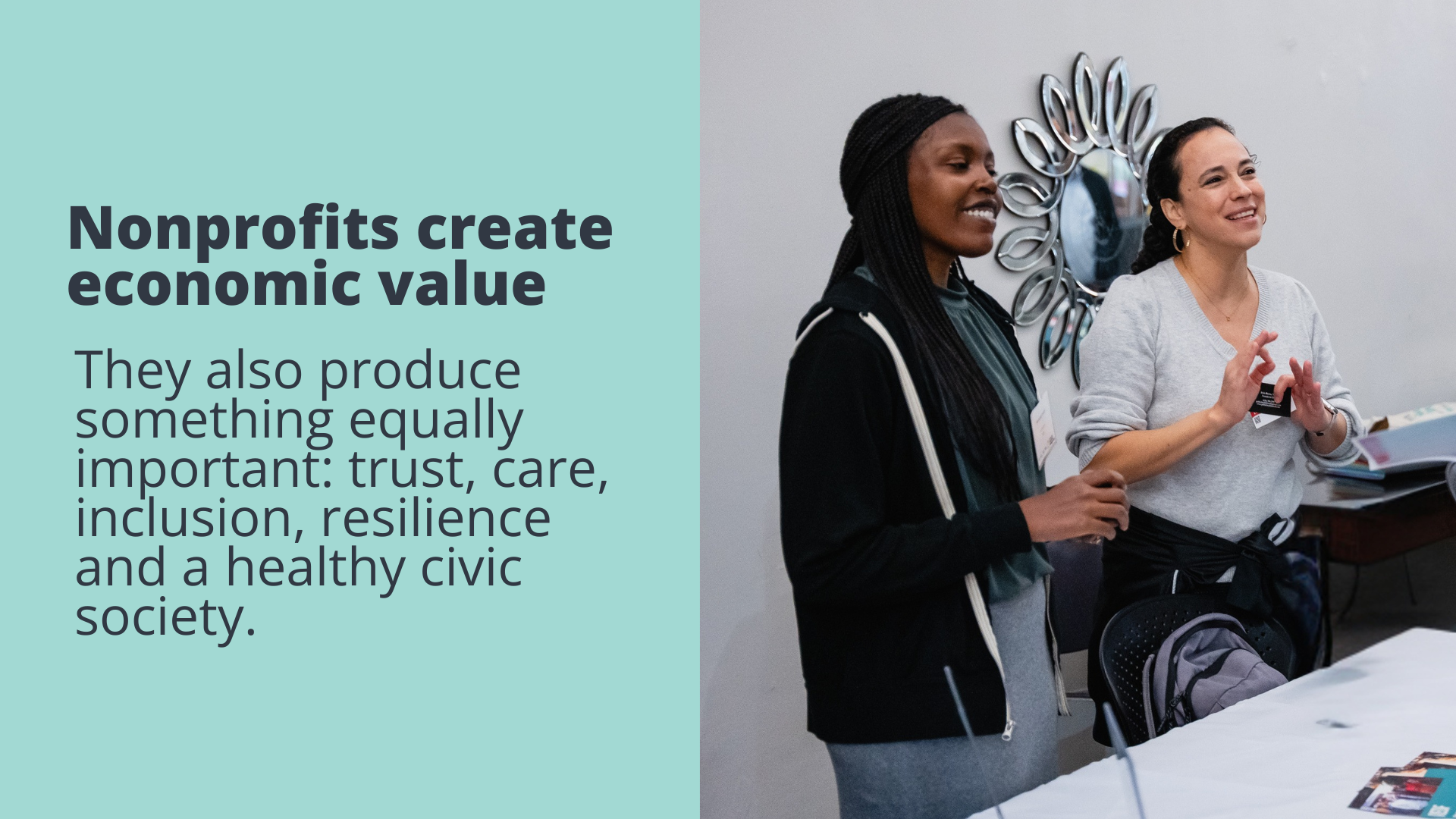
Nonprofits create economic value while also produce something equally important: trust, care, inclusion, resilience, and a healthy civil society. They convert resources into community well-being. They are the civic infrastructure that helps make economic prosperity possible.
The implications are significant.
Government should move beyond simply viewing nonprofits as a convenient procurement expenditure and instead view them as an investment in social infrastructure, job creation, and local economic activity. Philanthropy should expand its investment strategy beyond funding individual organizations and consider how to also strengthen the operating system of the sector itself. And nonprofit leaders should embrace a shared industry narrative that reflects the sector’s collective economic and civic contribution.
At the Center for Nonprofit Management, our vision is a nonprofit sector recognized as a cornerstone of a caring and inclusive Southern California economy. Achieving that vision will require a new playbook and multisector coalition that positions nonprofits not only as mission-driven organizations, but as a critical industry cluster that powers our region.
The question before us is no longer whether nonprofits matter.
The question is whether we are finally ready to recognize them for what they are: one of the most important engines of economic and community prosperity fueling a resilient triple bottom line of Los Angeles County economy.
Data collection and report was completed in partnership with Los Angeles County Economic Development Corporation (LAEDC).
Click here to access the full report.