

How the 2025 LA Fires Reshaped the Social Impact Sector
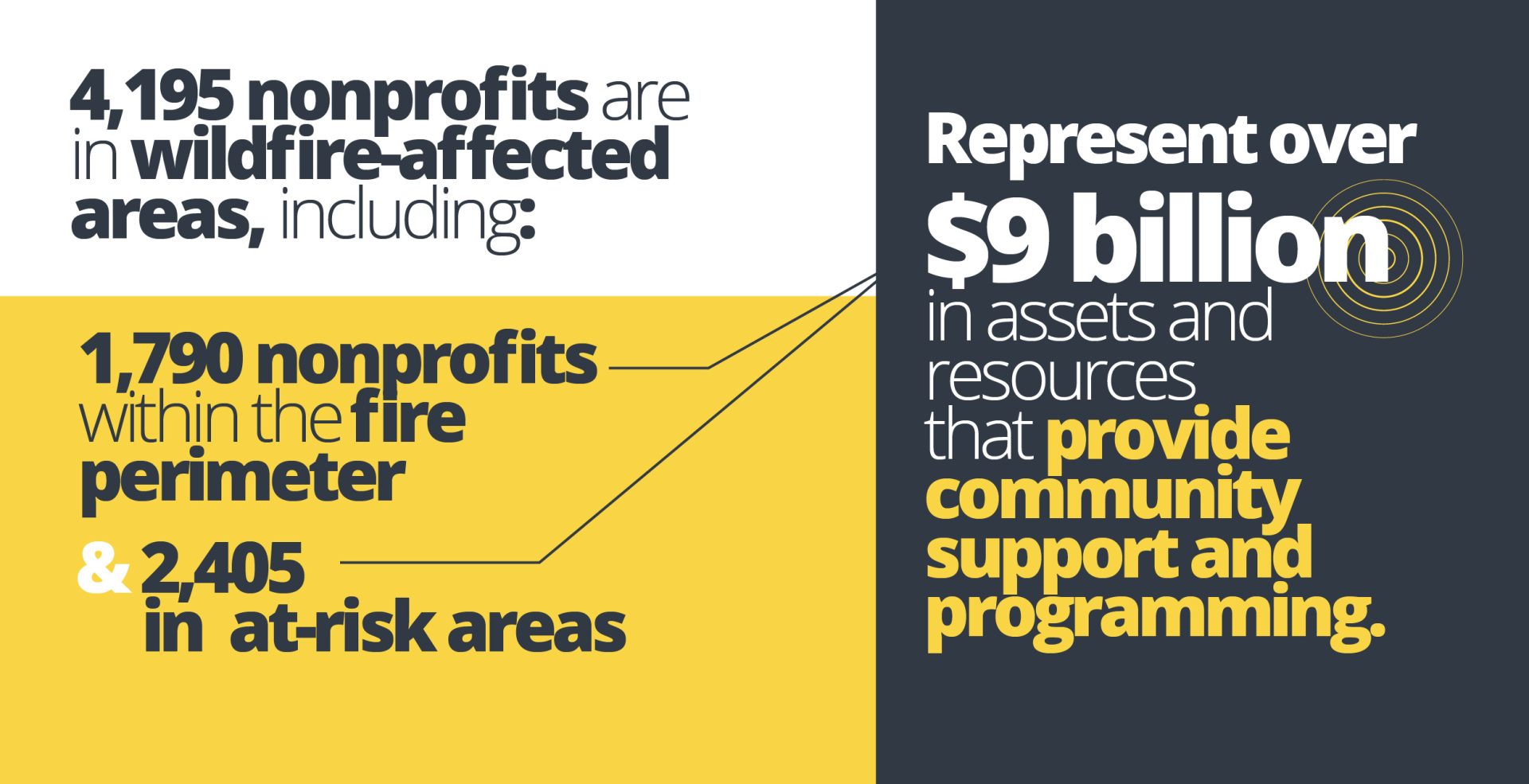
Over 10% of all nonprofits in LA County were located in areas affected by wildfires or under evacuation orders. That represents a total of 4,195 nonprofits in affected regions, including 1,790 within the fire perimeter and 2,405 in at-risk areas. The impact of the wildfires extends beyond property damage, significantly disrupting nonprofits that provide critical community services. These disruptions represent a significant part of the sector, jeopardizing the safety nets for vulnerable populations. The organizations in these impacted areas represent over $9 billion in assets and resources that provide community support and programming.
This sector plays a vital role in sustaining caring and inclusive communities through impacted neighborhoods. Nonprofits provide essential support in critical areas like healthcare and homelessness services, providing medical care, shelter, mental health support, and long-term housing assistance to vulnerable populations. With strong community ties, these organizations understand local needs and offer culturally responsive services, making them indispensable in times of crisis. However, the fires severely disrupted their ability to meet these needs.
To better understand the extent of this impact, we conducted a survey of nonprofits in the fire regions, to assess how they might have been affected, the challenges they face, and the ways they are working toward recovery. Our survey found that, in the immediate days and weeks following the start of the fires, the sector found itself at a breaking point. Some lost offices, supplies, and even the ability to operate. Many had staff that were impacted and unable to show up for work. Others, though spared from direct damage, were overwhelmed by a surge in demand for services. Families who had never needed assistance before were suddenly in crisis, seeking shelter, financial support, and even basic necessities like food and clothing. Already stretched thin, these organizations were asked to do the impossible—serve more people with fewer resources.
For many, the financial strain was immediate and severe. Events and fundraisers, once lifelines for operational costs, had to be canceled. Donations dwindled as the community itself struggled to recover. Increased expenses—emergency supplies, overtime pay, temporary staff—piled up, and some organizations faced the grim reality of shutting their doors. Others battled disruptions in funding cycles, uncertain if the support they relied on would continue in the wake of so much loss.
But perhaps the greatest challenge wasn’t financial—it was emotional. The weight of the crisis bore down not just on those seeking help but on the staff and volunteers providing it. Many had lived through the fires themselves, experiencing the same fear and uncertainty as the people they served. The need for mental health resources became just as urgent as the need for financial aid.

As the sector looks toward recovery, its needs are clear. Direct financial assistance is critical—grants, donations, and emergency funds to keep programs running and staff employed. Capacity-building resources and strategic partnerships can strengthen resilience for future crises. And above all, the people on the frontlines need support—volunteers to ease staff shortages, mental health services to sustain them, and a community that recognizes their role in rebuilding what was lost.
The social impact sector has always been the backbone of community support, and now, more than ever, it needs that same support in return. By coming together—through funding, collaboration, and care—we can ensure that these organizations not only survive but thrive. Recovery and rebuilding for a more resilient LA is not possible without a thriving social impact sector.
For more in-depth data exploration, CLICK HERE